Sheryl Markey
All the Bright PlacesSheryl Markey is Violet Markey’s mother, a figure whose care is expressed through both encouragement and watchfulness. She helps Violet turn a scattered idea for a magazine into an outline, then supports her growing independence with Theodore Finch while insisting on safety and school responsibilities. When Violet stays out late and her parents’ concern becomes a confrontation, Sheryl’s tearful defense of their intentions exposes the strain between protection and trust.
Encouraging Violet’s Ideas
When Violet explains that teenagers need a place to find advice, help, fun, or simply room to be themselves without being watched, Sheryl responds by asking practical questions about the proposed magazine. She asks who it would serve, whether Violet would write everything herself or work with contributors, and what purpose it would have. Her questions invite Violet to clarify the project rather than dismissing it for being unfinished.
Violet admits that she has only fragments, not a complete plan. Sheryl treats that incompleteness as a beginning: she suggests opening a document or using a blank sheet as a canvas, and encourages Violet to draw out the words and ideas already present. They spend the next two hours brainstorming. By the end, Violet has a rough webzine outline and a sketch of recurring columns organized under Lit, Love, and Life. Sheryl’s contribution is specific and collaborative: she helps make a private impulse concrete without taking ownership of it.
Welcoming Finch, With Conditions
Sheryl joins Violet’s father in receiving Theodore Finch after Violet has begun driving again with his help. She tells Finch that her parents are placing their trust in him and appreciate what he has done for Violet. Their permission for the two teenagers to spend time together is qualified rather than unrestricted: Sheryl asks Violet to have fun within reason, stay safe, and go to class.
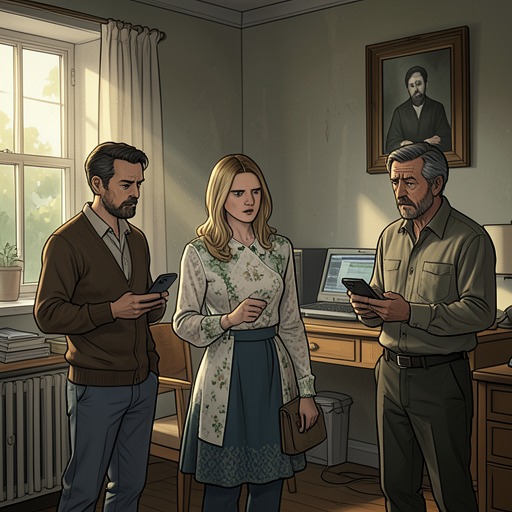
Her welcome makes room for Violet’s connection with Finch while keeping parental expectations explicit. Violet accepts the permission with thanks, though she feels dazed by the exchange. Violet’s father then asks Finch for his phone number and his parents’ contact information, reinforcing that the family’s trust comes with a desire to know how to reach him.
Concern and Conflict
Later, when Violet has not come home by one in the morning and is not answering her phone, her parents call Amanda Monk to ask whether Violet is at her house or whether she has seen her. Amanda says Violet is probably with Finch, the boy whose life she saved. The episode gives Sheryl’s protectiveness a concrete context: her worry follows an unexplained late absence and unanswered calls, rather than arising only from disapproval of Finch.
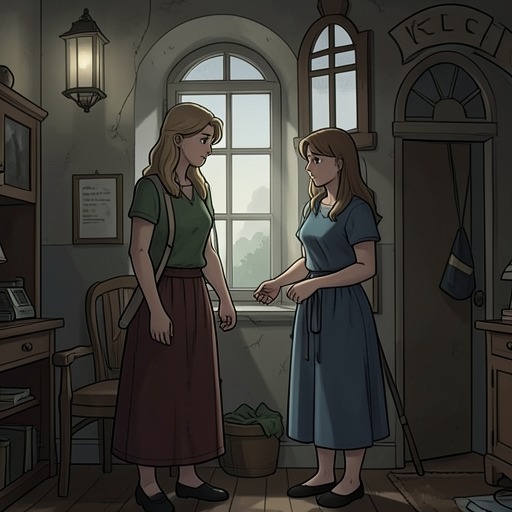
When Violet challenges her mother’s position, Sheryl’s face is wet and her eyes are red. She tells Violet that her parents are not trying to be the bad guys and are trying to do what is best. Violet answers that they do not trust her. The exchange leaves Sheryl’s care unresolved rather than triumphant: she understands her actions as protection, while Violet experiences them as a judgment on her reliability. Across these scenes, Sheryl supports Violet’s initiative and growing independence, but their conflict shows that good intentions alone do not settle what trust should look like.